Valentine’s Day During the Postpartum Daze: What Babies Teach Us About Love
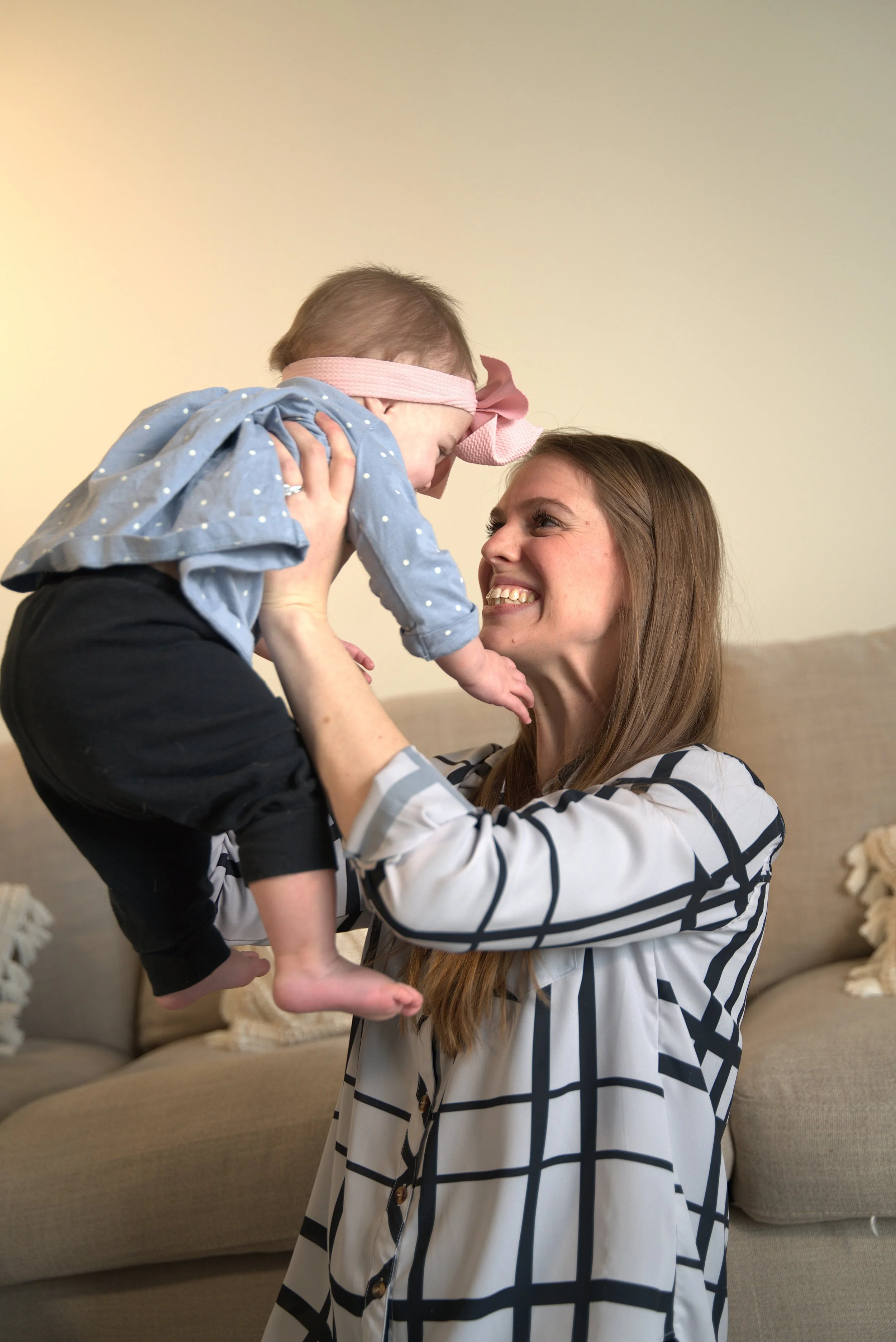
Valentine's Day has a way of shrinking love down to flowers, cards, chocolate or a fancy dinner reservation. If you're postpartum, it can also feel distant… or irrelevant. Or like something that belonged to a past version of you, before feed schedules and sleepless nights.
And if you've been scrolling Insta lately? You've seen either the Valentine's Day baskets for kiddos (a themed onesies, new toys, elaborate toddler activities, etc.) or the picture-perfect couple dates that somehow involve great hair and flawless skin. Meanwhile, you can barely remember if you brushed your teeth.
Let me just say it: that’s a lot to compare ourselves to. And you really don't need to do any of it. Just because you’re not doing something big to mark the holiday, it does not mean love has disappeared. It's likely just changed forms.
If you watch your baby closely, you'll see how they express love… not through the right words or grand gestures, but through the body. It’s a great reminder that we can love one another in more than one “right” way. Read on for the importance of infant tactile input on development and how babies bring us back to the basics when it comes to showing love.
Babies Experience Love Long Before They Understand It
Newborns don't know what Valentine's Day is. They don't care about grand gestures. They don't even know you as a separate person yet.
What they know is sensation.
The weight of a body holding them. The rhythm of a chest rising and falling. The pressure of hands that feel familiar.
From an infant development standpoint, touch isn't a bonus: it's foundational. The skin is one of the first sensory systems to develop, and it's how babies begin to understand safety, comfort, and connection.
It is through touch that babies learn: “I am not alone”.
Why Touch Regulates, Not Just Comforts
When a baby is held, their nervous system is borrowing regulation from yours. Heart rate slows. Breathing deepens. Stress hormones decrease. It's physiological reaction.
This is why skin-to-skin matters and is such a big buzz word when early postpartum. It’s also why contact naps are more successful than crib naps. And why a baby often settle instantly when placed on your chest after crying in a bassinet.
Touch doesn't just soothe emotions. It organizes the nervous system.
Here's the part we don't talk about enough: this goes both ways.
Parents often notice they feel calmer when holding their baby. That's not accidental. Human nervous systems are wired for co-regulation across the lifespan. Babies just make it more obvious.
Touch Doesn't Have to Be Fancy to Be Effective
There's a misconception that "intentional tactile play" has to look a certain way. Infant massage routines, perfect skin-to-skin time, sensory play, and calm, present moments only.
But real life postpartum touch looks messier.
It's adjusting a baby in your arms while trying not to fall asleep yourself. It's resting a hand on their back during a late-night feed. It's consistently allowing baby to touch and explore foods when introducing solids. It’s even tummy time on various surfaces.
From a developmental perspective, these moments count. Repetition and familiarity matter far more than perfection because babies don't need novel experiences, they need consistency.
(Inside OPTimize Postpartum, we walk you through baby massage techniques and tactile touch strategies, but not because you need to add something else to your day. These are helpful for moms who want to feel more confident in those moments.)
What Babies Teach Us About Love (That Adults Forget)
As adults, we often treat touch as optional or conditional. Something reserved for romance, or comfort during hard moments.
Babies remind us that touch from one another is foundational. It says: You're safe here. I'm paying attention. You belong.
Postpartum parents are often touch-deprived and touch-overloaded - at the same time. It’s a whirlwind and mentally exhausting as we crave adult connection while giving so much of it physically to our babies.
Note: Self-compassion matters. If touch feels overwhelming some days, that doesn't mean you're doing it wrong. It means your nervous system needs support too.
Love in the First Year Looks Different… and That's Okay
Postpartum love for your baby isn't performative. It's quiet. Repetitive. Sometimes invisible.
It lives in the way you instinctively place a hand on their chest to check their breathing. In the way your body adjusts before your brain catches up. In the thousand small touches that make up a day.
This is why infant development and postpartum recovery can't be separated. A regulated caregiver supports a regulated baby. A supported parent can show up more fully in these moments of connection.
And if you're reading this feeling disconnected from your partner, or frustrated that the romance is gone, or worried that this is just how it is now, I get it. I've been there. With a 4-year-old and a 1.5-year-old, I've cycled through phases of feeling like roommates, like we can’t relate to one another, like we're crushing it, and back again.
Some of the best advice that helped get me through it: this is a season. It will pass.
It's too easy to spiral and think this is the new forever. That you'll never feel like yourself again, or that your relationship will always feel like this. But babies grow. Sleep gets better (eventually). You get your body back in ways you didn't expect. And those little micro-moments of showing up for each other? They add up and help lay the foundation for how you find your way back to one another.
This Valentine's Day, Consider a Broader Definition of Love
If this Valentine's Day looks different than you expected, you're not alone. Love may feel quieter right now. Less obvious. More emotional than physical or vice versa.
But that doesn't mean it's smaller.
Babies teach us that love isn't about expression, it's about presence. And touch is one of the earliest, most powerful ways we communicate it.
Even when we're tired. Even when we're unsure. Even when we don't feel very romantic at all.
You don't need the basket. You don't need the reservations. And you definitely don't need to look like anyone else's version of postpartum love.
You just need to keep showing up: in the small, repetitive, messy ways you already are.
That's more than enough.